

Handprinted by Hannah Cole
100% of proceeds go to rebuilding my studio.
Wealth inequality in the US is at record levels. We’re feeling it.
So I’m doing a fundraiser to rebuild my Helene-destroyed studio that doubles as what I do best:
Helping you understand & spread the word about a key issue that’s complex. Fact-based, and offering real solutions. With a touch of handmade vibes.
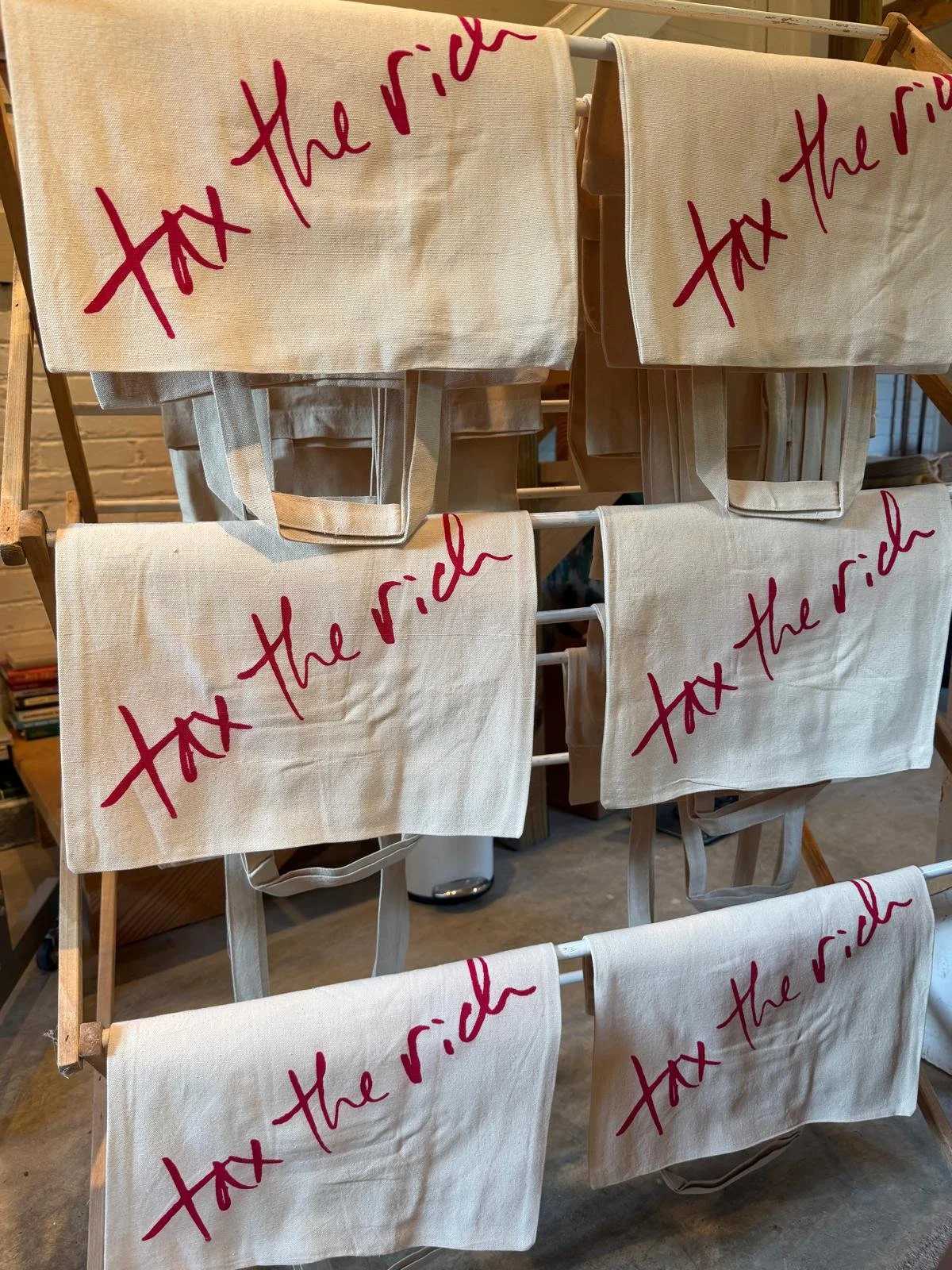
Spread the word (before the midterms), and buy a hand-printed tote that helps me rebuild.
Not “eat the rich.” And not “punish the rich.”
But, “bring the rich into the same tax-paying citizenship that the rest of us are already paying into.”
Tax Fairness 101:
-
Wealth inequality is at record levels.
The top 1% control 1/3 of US wealth
While the bottom half own 3% of US wealth
1 in 10 living in poverty
today the average American is paying a higher percentage of tax than the top 400 wealthiest people in the US
-
“The statistic that saves the rich from taxes,” according to tax policy expert Ray Madoff, is this one:
→The top 1% of Americans pay 40% of the total US tax revenue.
How is this misleading?
It’s about the top 1% of income earners who pay 40% of US tax revenue. Not the wealthy.
It leaves out the wealthy altogether. The wealthiest Americans don’t earn much income (aka “salaries are for suckers”). Their money comes from the growth of what they own (“capital” is the tax word for that). Company stock, investments, real estate.
-
When you own assets, you don’t pay any income tax on them. You don’t even pay capital gains taxes on them unless you sell them. And there are a bunch of loopholes in the tax code that prevent taxability even when these assets are transferred, though that’s the time they should be taxed.
(Examples include:
the carried interest loophole
the 1031 exchange
the qualified small business stock exclusion
the absence of any inheritance tax
The absence of tax on gifts
Tax free life insurance proceeds
and the step-up in basis rules)
-
The average American pays a tax rate of 30%.
The wealthy pay an average rate of 24% but many pay dramatically lower, (Bezos 0.98%, Buffett 0.10%, Bloomberg 1.30%, Musk 3.27%)
Average Americans pay:
Income tax rates up to 37%
Payroll taxes (on top of income tax) up to 15.3% (self-employed people, this is you)
Payroll taxes are hidden taxes, with confusing names, like FICA and FUTA
Someone making $60,000 pays over $13,000 in combined federal income tax and payroll tax.
High income earners might pay 50% of income in taxes, especially if they live in a high tax state (think doctors, lawyers, and sports stars)
-
Avoid “earned income.”
Warren Buffet has never taken a salary greater than $100,000.
Jeff Bezos’ salary is $82,000. Sam Altman’s salary is $76,000.
Elon Musk takes a salary of $1/year.
Rely on the growth of their assets– they own largely company stock
Borrow money against their pile of wealth and get very favorable interest rates because they have so much wealth/so little default risk.
FYI: Loans do not count as taxable income. So this is a tax-free way to access money.
Don’t they have to pay it back?
Not really. The bankers job is to loan money. If one loan ends, they need to find another. They often prefer to keep these easy clients rather than go out and find new ones.
Billionaires/multi-millionaires don’t have trouble rolling over the loans or getting a new loan. They are highly desirable clients to the bank.
With this strategy, many billionaires and multi -millionaires pay close to nothing in taxes.
-
Failure to Tax appreciation
Failure to Tax inheritance
If you find $100 on the street, you have to record it and pay taxes
If you inherit $1 billion you don’t pay a penny
Tax should happen when they transfer the property. When they no longer own, it is when they should tally the gains and pay tax
They have a rule like this in Canada
Our lack of inheritance tax means we are becoming a country ruled by rich kids.
The estate tax is supposed to be the time where taxes get paid on money before it’s distributed, but it has been gutted and filled with loopholes
In the early 90s, there was a campaign by the 18 wealthiest families in the US to turn the public against the estate tax.
It worked. Ordinary Americans feared that the estate tax would hurt family farmers–even though these lobbyists could not locate a single American farm that would be subject to the tax.
1990 was the last time Congress closed a loophole in the estate tax
-
It’s a waste of political capital.
The Supreme Court has indicated it will likely strike one down. It’s not clear that taxing wealth is legal in the US Constitution without an amendment.
It creates a mess: taxing "wealth" (unlike taxing income) is hard. It means you have to assess the value of that wealth each year, and this is really hard to do. I can picture the burgeoning accounting business of promising to have the most aggressively tiny valuations for wealthy citizens.
-
Taxing assets at the moment of transfer, across the board.
-
Defunding the IRS.
IRS enforcement funding cuts allow wealthy tax cheats to skip out on paying the taxes they acknowledge they owe (aka “the tax gap”). In 2025, this was about $700 Billion dollars of taxes owed that went uncollected.
Every dollar spent on IRS collections returns $12 to the American taxpayer.
Joe Biden tried to stop this waste by allocating $80 billion to IRS enforcement efforts (in the 2022 Inflation Reduction Act), specifically targeted to taxpayers with over $400,000 in annual income. Republicans in Congress later cut that funding.
If you’re going to do the work of organizing and advocating for fairer tax laws, that work is moot without funding the organization who enforces those laws (the IRS).
Wealthy tax cheats like a weak IRS, and they’ve convinced us to hate them, too. Don’t take the bait. The IRS is a body of civil servants with a very important job.
Passing fairer tax laws is a waste of time if we never bother to collect the money in the end. The solution: adequately fund the IRS.
-
Tax assets at the time of transfer. End the exceptions (the step-up in basis, 1031 exchange, qualified small business stock exclusion, etc)
Bring inheritances into the income tax system. Tax them as income.
Equalize the rates between capital gains and ordinary income tax rates.
Fund the IRS
-
Spread the word about this campaign.
Share what you know.
Share this website (sunlighttax.com/taxtherich)
Call your Senators
Call your US Member of Congress
Support one of these organizations
Truth, research and facts:
Fair tax advocacy:
-
I am a tax practitioner, but not a policy expert. I am grateful to the following tax policy experts and economists for their research:
Ray Madoff, author of The Second Estate: How the Tax Code Made an American Aristocracy. (A fantastic read, highly recommend).
You can hear Ray Madoff talk about her book on these podcast episodes: The Ezra Klein Show, The Prof G Markets podcast
Katherine Anne Edwards, economist, and co-host of the podcast The Optimist Economy
William G. Gale, economist at the Brookings Institution (who I interviewed about tax policy on the Sunlight Tax podcast, and for the chapters on tax policy in my book, Taxes for Humans).

Studio fundraiser
In late 2024, I lost my studio to flooding from Hurricane Helene.
It housed 25 years of my art, all my equipment, and supplies.
At the time, I raised $20,000 for other people in Asheville and gave it all away, plus $10,000 out of my own pocket.
I didn’t take a dollar for myself.
Now that I’m ready to rebuild, I’m grateful for your support at any level, including getting the word out.
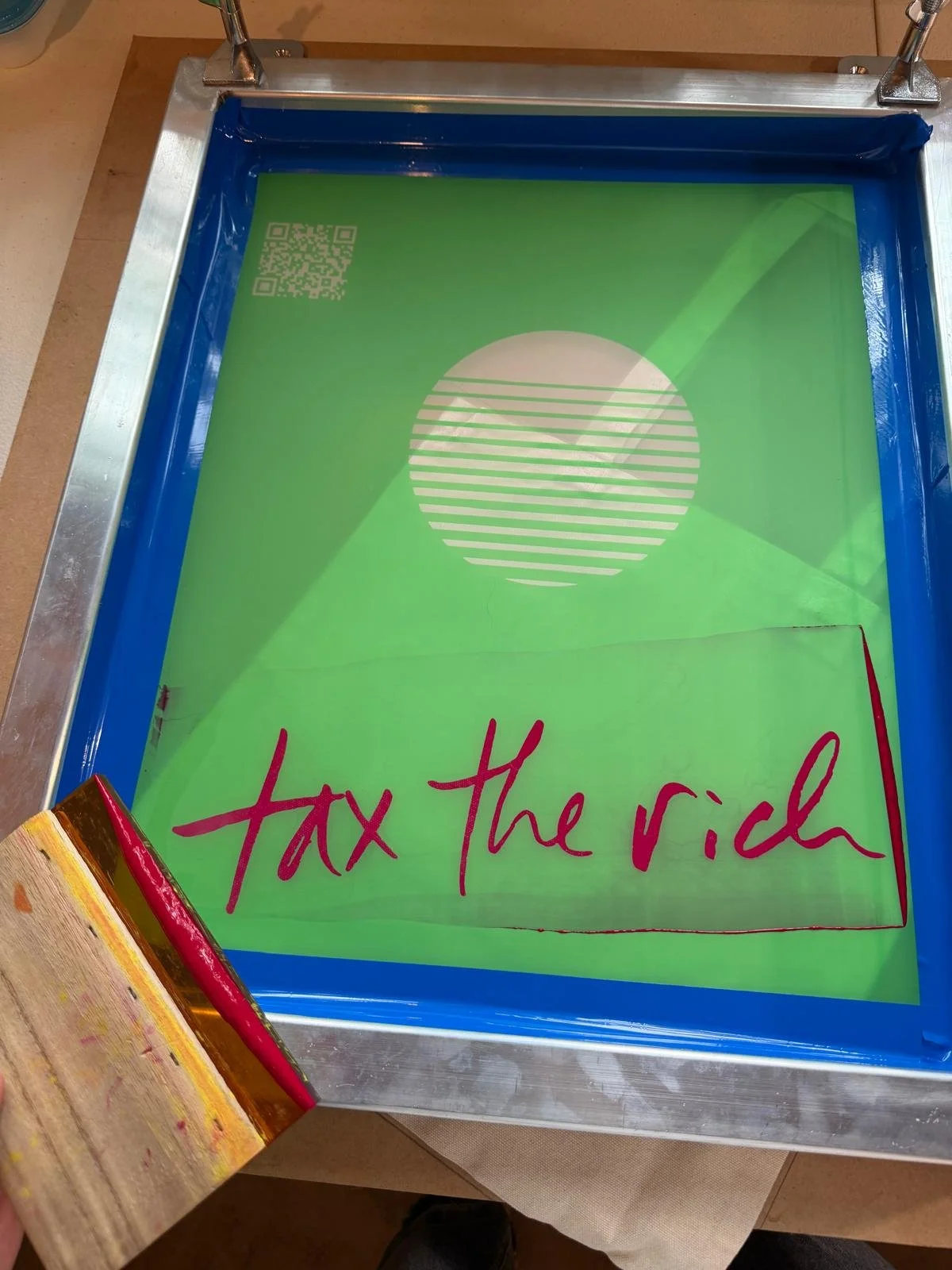
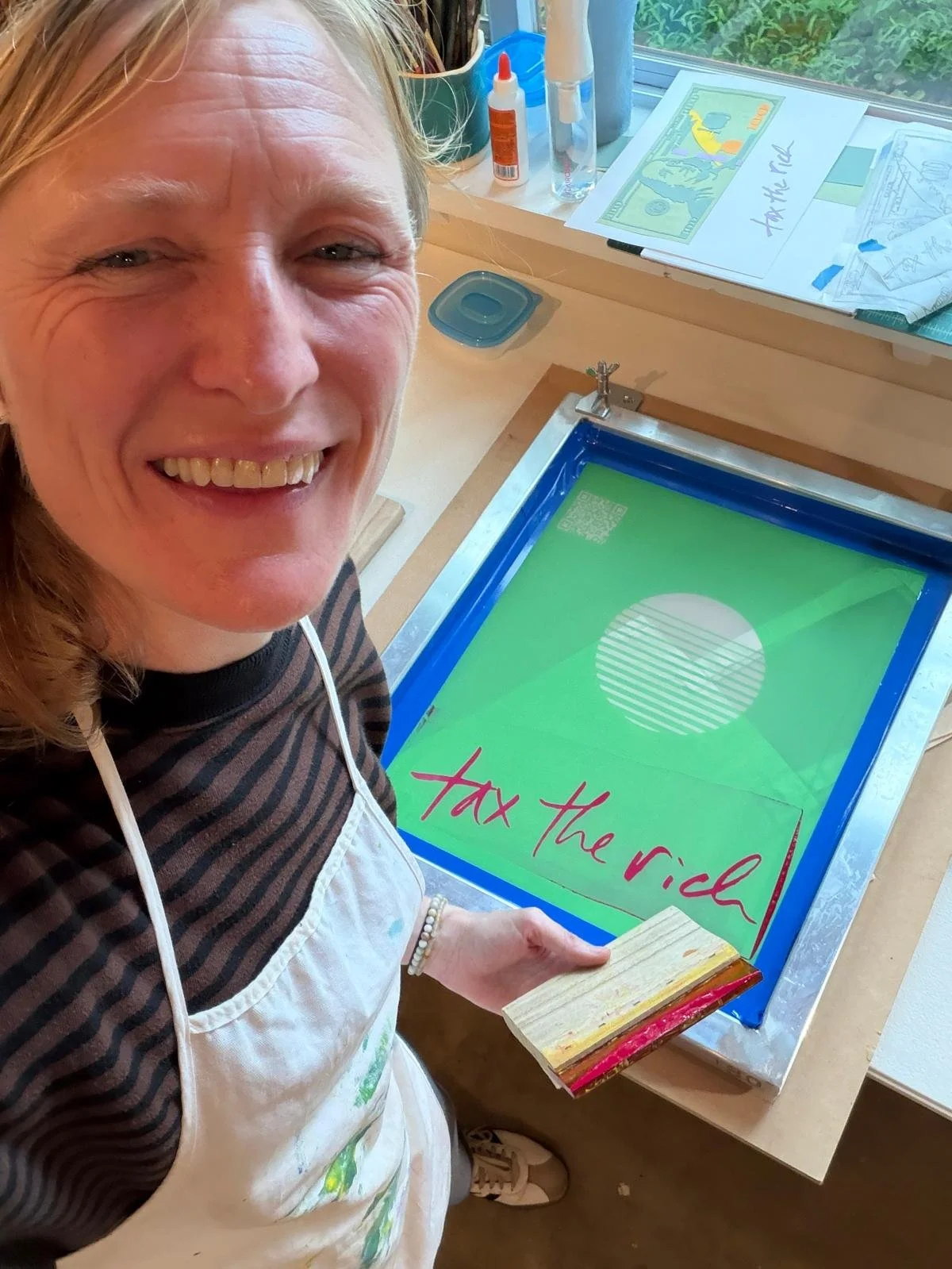
help me rebuild my studio
100% of proceeds go to rebuilding my studio and restock supplies I lost in Hurricane Helene.
Dimension: 13 x 13 in
Material: lightweight cotton
1 tote bag + studio support
Use it as a conversation piece to talk to friends and neighbors.


Be a studio super supporter.
Give to friends, spread the word, and be my studio angel. ❤️